

The Duleep Trophy can help players prepare for T20 leagues by strengthening the skills beneath their attacking game: sound judgement, repeatable technique, bowling accuracy and the ability to solve problems under pressure. Those benefits are possible transfers between formats, rather than proof that a strong first-class performance guarantees a franchise contract.
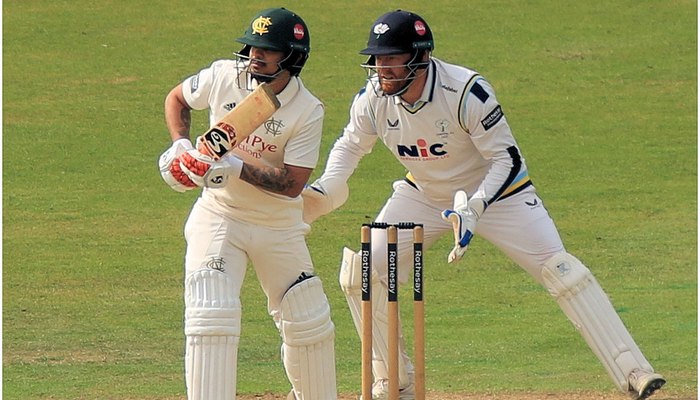

A batter facing a demanding spell with a red ball has a different immediate task from a finisher chasing a steep required rate. Yet both must read length early, choose a scoring option and commit to it. Understanding that connection makes India’s domestic season more interesting to follow, even if your favourite competition lasts only twenty overs per innings.
Information checked: 28 November 2026. Competition details below come from the BCCI. The discussion of skill transfer is editorial analysis.
What Kind of Competition Is the Duleep Trophy?
The Duleep Trophy belongs to India’s multi-day, red-ball structure. In its announcement for the 2026–27 domestic season, the BCCI scheduled the tournament to begin on 23 August with six zonal teams. Its separate squad announcement named North, South, East, West, Central and North East zones and placed the event at the BCCI Centre of Excellence in Bengaluru.
That context matters. Calling the Duleep Trophy a T20 competition, an IPL qualifier or an official franchise trial would misrepresent its purpose. Players compete for their zonal side in a first-class setting. Any benefit for shorter cricket comes through the abilities they develop and demonstrate, alongside the work they do in other competitions and training.
Reading Length Before Choosing a Shot
In multi-day cricket, a batter often has to decide whether to leave, defend or attack against a bowler who can keep testing the same area. A rushed decision may end an innings. That repeated challenge encourages careful observation of release, line and length.
In T20 cricket the available time is shorter, but the underlying question remains familiar: what can I do with this particular ball? A player with a clear base position may be better placed to choose between a straight hit, a cut or a controlled single. Good technique does not require every batter to play identical shots. It provides a stable starting point from which different options become available.
Learning to Score Without a Boundary
Long innings require more than defence. A batter who cannot move the score allows a bowling side to settle into a comfortable plan. Finding a gap, judging a quick single and rotating strike can make a difficult passage less restrictive.
Those habits are useful when a T20 side encounters a slow surface or a large boundary. A quiet over need not become a sequence of increasingly desperate swings. Batters can assess which fielder offers a safer single and which delivery genuinely deserves a boundary attempt. Running between wickets also depends on communication with a partner, something that cannot be measured by a six-hitting montage alone.
Bowling Control Creates a Platform for Variation
A multi-day bowler may work through a plan over several overs: establish a line, draw a response, adjust the field and test the batter again. That process makes control visible. The scoreboard alone will not show every ball that maintained pressure, but a watchful observer can see whether the bowler repeats an intended length.
T20 bowlers often add slower balls, wider lines or fuller deliveries. A variation is most useful when it can be delivered deliberately. Practising a complicated change of pace is less valuable if the bowler cannot also execute a dependable stock ball. The Duleep Trophy offers a setting in which that basic repeatability can be examined, although it does not recreate every requirement of a death over.
Adapting a Plan When the First One Fails
Cricket rarely follows a perfect script. A batter may find that driving is unsafe, or a spinner may discover that a preferred pace is too easy to read. Multi-day matches give players time to test adjustments and see how opponents respond.
A comparable thinking process applies in a league match, compressed into fewer deliveries. A captain might protect one boundary and invite a hit towards another. A batter might change position at the crease to alter a bowler’s angle. The useful habit is noticing evidence and adjusting with a purpose, rather than making changes simply because the previous ball went badly.
Concentration and Emotional Recovery
After being beaten outside off stump, a batter still has to face the next ball. After conceding a boundary, a bowler still needs a clear plan for the following delivery. Longer matches provide many opportunities to practise that reset.
T20 highlights can make the format look like a continuous burst of confidence. In practice, uncertainty is part of the contest. A player who can separate the last outcome from the next decision may avoid turning one mistake into several. That is a useful way to watch a domestic performance: notice the response after a setback, not only the celebration after a success.
What First-Class Cricket Cannot Replace
Red-ball experience does not automatically produce the specialised skills a franchise needs. Batters still have to practise scoring against defensive fields, recognising slower balls and taking calculated risks before they are fully settled. Bowlers need direct experience of powerplay restrictions and late-innings demands under the applicable playing conditions.
Fielding roles can also differ. A player stationed close to the bat for long periods must still prepare for boundary catching and fast returns in limited-overs cricket. Conditioning and recovery should fit the actual workload, rather than an assumption that fitness for one format covers every other format equally well.
How Fans Can Assess a Player Fairly
Start with the role. An opener’s disciplined innings and a lower-order batter’s rapid contribution answer different questions. For bowlers, consider the pitch, the ball’s age and the match situation before comparing figures. A useful spell can contain an important tactical contribution even when another bowler collects more wickets.
Then compare performances across formats. Look for evidence of the same judgement under shorter time limits. Avoid treating one innings as a complete scouting report, or using first-class strike rates as direct predictions of franchise returns. Selection depends on the needs of a squad as well as an individual’s ability.
Where the Duleep Trophy Fits in the Bigger Picture
The most helpful view is to see different formats as complementary experiences. Multi-day cricket can reveal patience, control and resilience. Shorter competitions test how effectively those foundations support quicker decisions and more aggressive plans. Neither set of evidence should erase the other.
For a practical look at the shorter format, read our BBL 2026–27 schedule overview. For an example of batting foundations supporting sustained acceleration, explore the highest men’s ODI team totals.
Sources: BCCI domestic season announcement; BCCI Duleep Trophy squad and venue announcement.